12 Best Conversational AI Platforms in 2026: Features, Pricing, and Fit Compared

Quick Summary
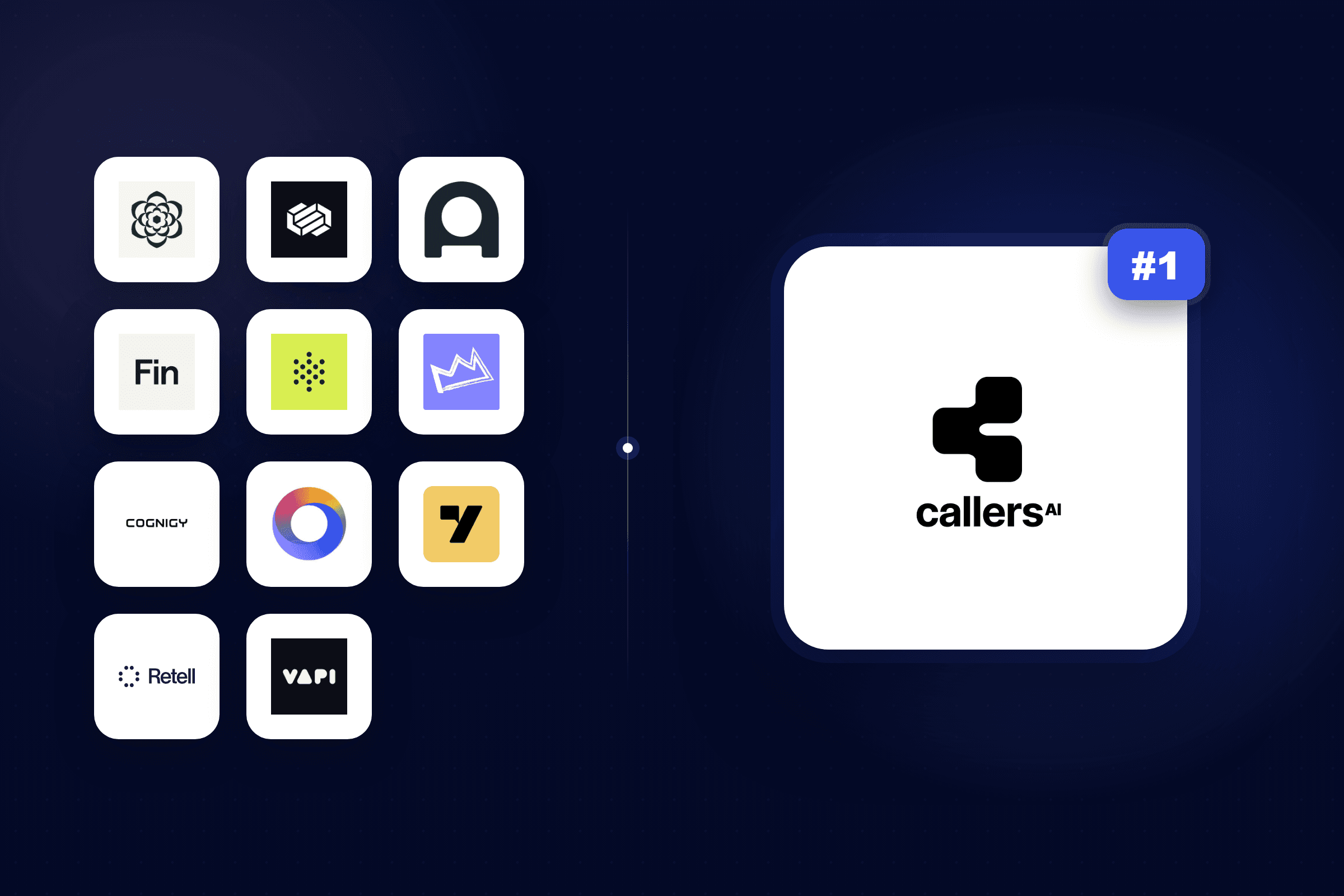
CallUltra tops the 12 best conversational AI platforms in 2026 with one omnichannel agent handling inbound and outbound across calls, chat, and messaging. Sierra, Decagon, Ada, and Fin lead customer service automation. PolyAI and Regal specialize in voice. Cognigy, Kore.ai, and Yellow.ai serve enterprises. Retell and Vapi suit developers.
|
# |
Tool |
Key features |
Best for |
Pricing (2026) |
|---|---|---|---|---|
|
1 |
CallUltra |
Omnichannel one-brain agents, outbound campaigns, white-glove onboarding |
High-volume B2C teams |
Custom, usage-based per minute |
|
2 |
Sierra |
Ghostwriter agent builder, omnichannel agents, observability |
Large enterprise CX |
Custom (outcome-based) |
|
3 |
Decagon |
Natural-language AOPs across voice, chat, and email |
Consumer brands with big support volume |
Custom (per conversation or per resolution) |
|
4 |
Ada |
Multi-LLM agent, 60+ languages, playbooks |
Global consumer brands |
Custom (contact sales) |
|
5 |
Intercom Fin |
Per-resolution AI agent, works on any helpdesk |
Chat and email support teams |
$0.99 per resolution |
|
6 |
PolyAI |
Enterprise voice agents, managed deployments |
Large inbound contact centers |
Custom (per minute) |
|
7 |
Regal |
AI phone, SMS, and chat plus dialer and journeys |
High-volume B2C contact centers |
Custom (about $0.20/min per vendor blog) |
|
8 |
Cognigy |
Agentic AI, voice gateway, Agent Copilot |
Enterprise contact centers |
Custom (per conversation) |
|
9 |
Kore.ai |
Multi-agent platform for service and employee AI |
Regulated enterprises |
From $0.20 per conversation, enterprise custom |
|
10 |
Yellow.ai |
35+ channels, VoiceX voice, multi-LLM |
Global B2C enterprises |
Free tier, then $0.99 per resolution |
|
11 |
Retell AI |
Developer phone agents, batch calling, SIP |
Engineering teams |
$0.07 to $0.31 per minute |
|
12 |
Vapi |
Bring-your-own-stack voice orchestration |
Developer teams at scale |
$0.05/min platform fee plus provider costs |
Looking for a Conversational AI Platform?
Every customer service vendor now calls itself a conversational AI platform. The label covers chat widgets, phone automation, and everything between. That makes shopping the category slow and confusing.
This guide compares 12 leading AI voice and chat platforms so you can shortlist faster.
One note before the list. This is business software for automating customer conversations. If you want a personal assistant like ChatGPT, this is a different category. Every platform here builds AI agents that talk to your customers over voice, chat, or messaging, then logs the outcome in your stack.
Why Listen to Us?
DoorDash, Einride, and PadSplit run live customer conversations on CallUltra. Underneath sits a platform built with Google Cloud that has scaled 30X and now handles hundreds of thousands of AI conversations a day.
We also watch what those conversations deliver. One customer reduced call-center load 65% while growing outreach tenfold. Another took 46% off outbound handling time and hired more salespeople to keep pace with demand. The full stories are in our case studies .
What Is a Conversational AI Platform?
A conversational AI platform is software that runs customer conversations for your business. It answers and makes phone calls, replies to chats, and handles messages without a human on every interaction. The good ones connect to your CRM, complete real tasks like refunds and bookings, and hand off to your team when a conversation gets sensitive.
The term gets stretched, so it helps to know what sits outside it.
Consumer chatbots like ChatGPT are for individuals. Scripted website widgets and rigid phone menus predate the category and can't hold a real conversation. The platforms below understand natural language, keep context across turns, and act on what customers say.
Within the category, five distinct types have emerged. Knowing which type you're buying matters more than any feature comparison.
|
Platform type |
Tools in this guide |
Built for |
|---|---|---|
|
AI customer service agents |
Sierra, Decagon, Ada, Intercom Fin |
Chat-led support resolution, increasingly priced per outcome |
|
Omnichannel conversation platforms |
CallUltra |
One agent handling calls, chat, and messaging in both directions |
|
Voice-first platforms |
PolyAI, Regal |
Contact centers where the phone call is the core product |
|
Enterprise conversational AI suites |
Cognigy, Kore.ai, Yellow.ai |
Fortune 500 governance, language coverage, and sales-led rollouts |
|
Developer voice AI platforms |
Retell AI, Vapi |
Engineering teams assembling and maintaining their own agents |
Support-led teams usually start with the CX agents. If calls carry real revenue or volume for you, look at the omnichannel and voice-first rows first, starting with an AI call center approach.
The 12 Best Conversational AI Platforms
1. CallUltra
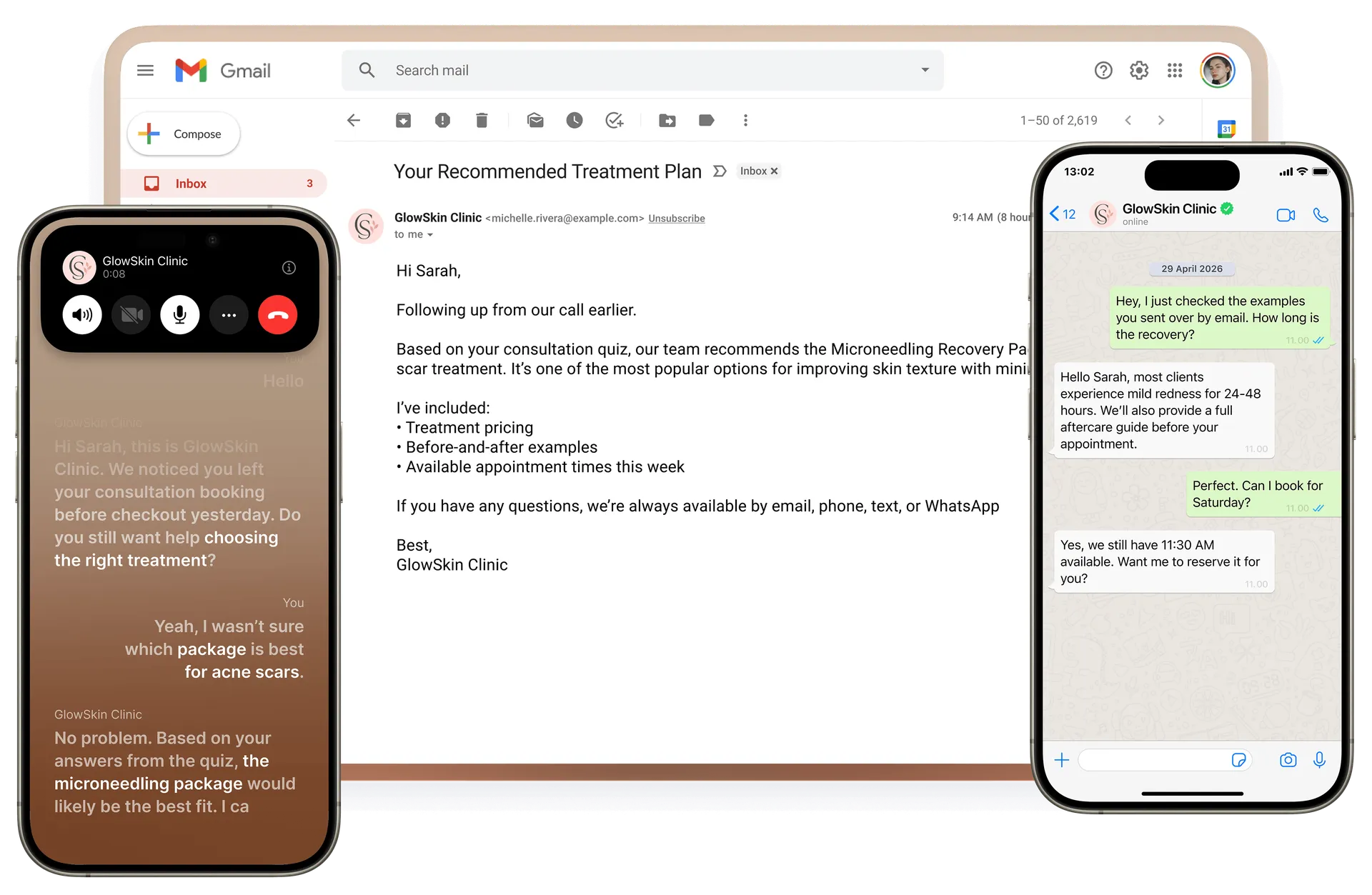
CallUltra is an omnichannel AI voice and chat platform for high-volume B2C businesses. One agent works across phone, SMS, WhatsApp, email, and chat, and carries the same context through all of them. Outbound calling is a first-class job here, alongside inbound.
That combination is rare in this list. Most platforms here automate one channel deeply and bolt on the rest, or serve one direction of conversation. CallUltra runs them all from one brain, and pairs the software with white-glove onboarding on every plan. Operators build and launch without engineering, a dedicated CSM handles setup, and teams typically go live in weeks.
Key features
-
Omnichannel one brain : one agent with shared context across calls, SMS, WhatsApp, email, and chat
-
Outbound campaign builder : multi-step sequences, conditional retries, and pre-call triggers
-
No-code flow builder : drag-and-drop scripting with AI assistance, owned by operators
-
26+ languages : emotionally intelligent voices with mid-call language switching
-
Step-level analytics : see the exact step where conversations break down
-
White-glove onboarding : dedicated CSM and managed setup on every plan
Pricing
Custom, usage-based per minute. You pay for conversation time, with onboarding and a dedicated CSM included rather than sold as a services contract. Compliance covers SOC 2, HIPAA, GDPR, CCPA, and PCI DSS.
Pros
-
Warm transfer routes high-stakes conversations to your team
-
Live in weeks, with operators running campaigns instead of developers
-
610+ native integrations, including Salesforce, HubSpot, and Zendesk
-
Step-level analytics that show exactly where scripts lose people
-
Proven at scale with DoorDash, Einride, and PadSplit
Cons
-
Pricing requires a demo rather than self-serve signup
-
Built for conversation volume, so low-volume teams see less value
Best for
High-volume B2C teams that want one agent across every channel, from lead qualification to support.
Why choose CallUltra
Pick CallUltra when customer conversations drive your revenue or your support load. The CX agents on this list are strongest in chat. The enterprise suites take months and a services team to deploy. The developer platforms hand the work to your engineers.
CallUltra covers every channel in one platform, with campaign logic, native integrations , and a team that sets it up with you and stays involved. Your operators run it from there.
2. Sierra
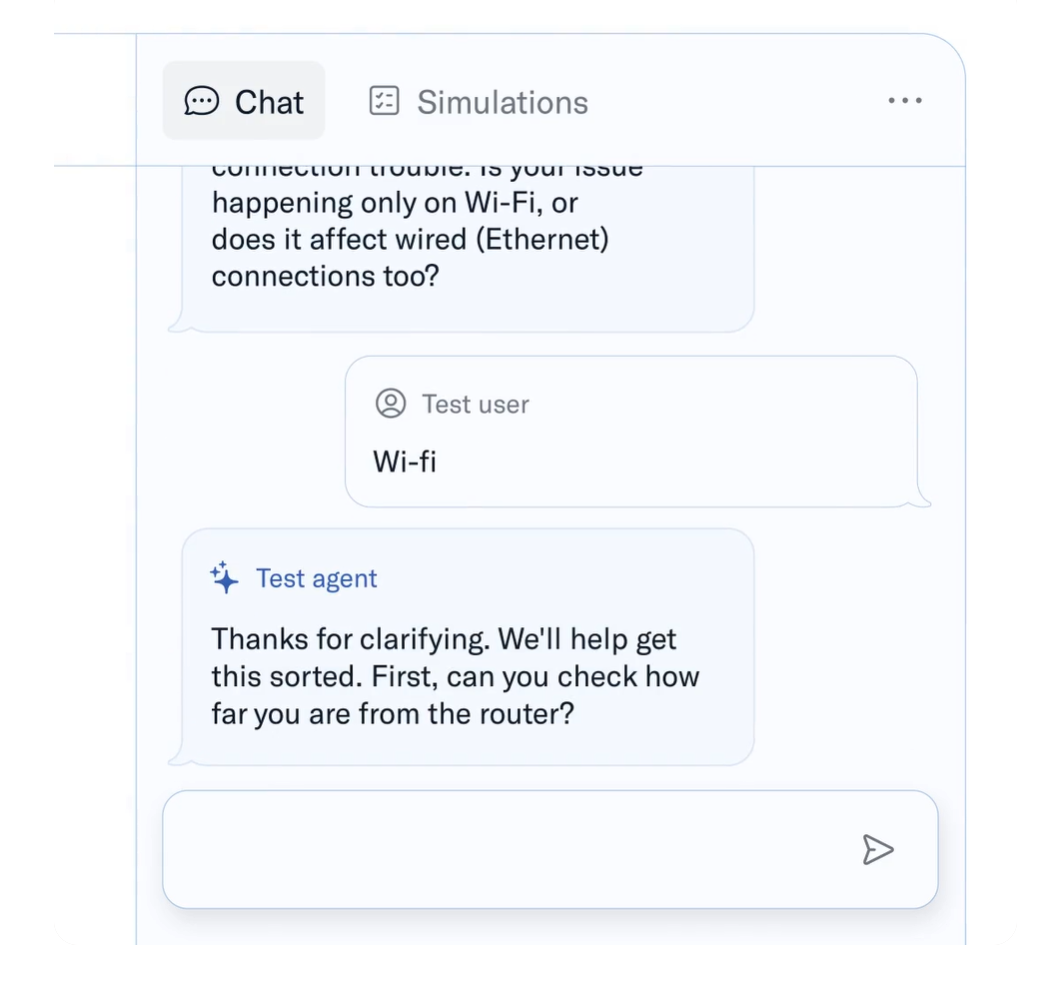
Sierra is the enterprise heavyweight of the AI agent category, founded by former Salesforce co-CEO Bret Taylor. It deploys a single agent across chat, SMS, WhatsApp, email, voice, and even ChatGPT, with customers like Rocket Mortgage, SiriusXM, and ADT.
Key features
-
Ghostwriter : builds production-ready, multilingual agents from your existing docs
-
Voice Personas : configurable voice agents with low-latency speech
-
Insights : deep analytics on agent conversations and performance
-
Observability : an audit trail of every action the agent takes
-
Broad channels : chat, SMS, WhatsApp, email, voice, and ChatGPT
Pricing
Sierra doesn't publish pricing. The model is outcome-based. You pay when the agent delivers a defined outcome, like a resolved conversation or a saved cancellation, and unresolved conversations generally cost nothing. Deals are negotiated through sales.
Pros
-
Outcome-based pricing aligns cost with results
-
Strongest enterprise logo roster in the category
-
Mature voice, well beyond a chat bolt-on
-
Ghostwriter cuts agent build time dramatically
-
Strong governance story for regulated buyers
Cons
-
No published pricing, and entry costs sit at enterprise level
-
Every deal needs careful negotiation of what counts as an outcome
-
No self-serve option or trial
Best for
Large enterprises with heavy support volume that want a premium, outcome-priced agent platform.
Why choose Sierra
Choose Sierra if you're a large enterprise standardizing customer conversations on one agent platform and you want the vendor's incentives tied to resolutions. Budget for an enterprise sales cycle and a guided rollout.
3. Decagon
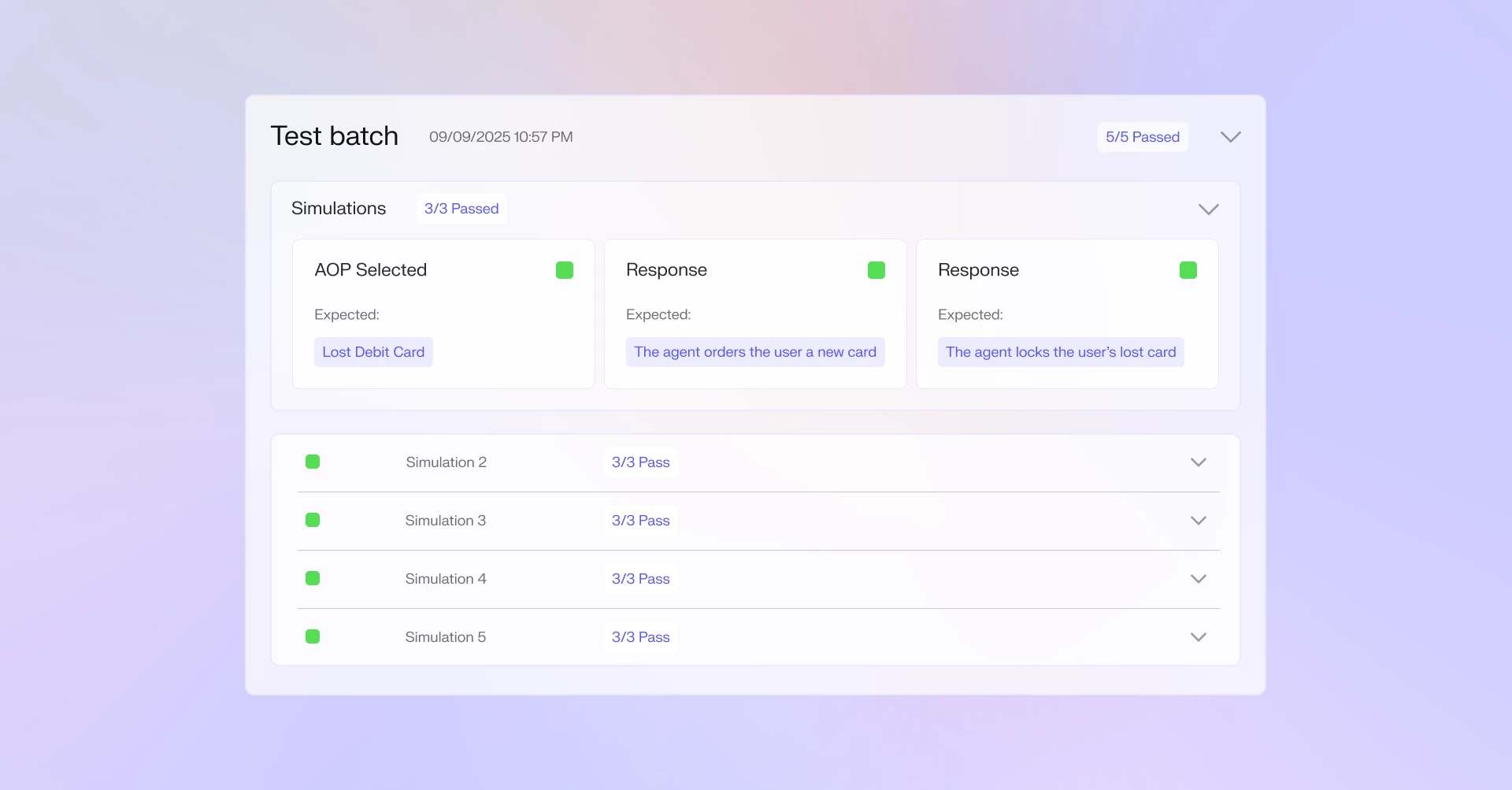
Decagon builds AI support agents that teams steer in plain English. Its Agent Operating Procedures let CX teams write workflows as natural language instead of code or config, across voice, chat, and email. Customers include Duolingo, Chime, and Rippling.
Key features
-
AOPs : agent workflows written and edited in natural language
-
Omnichannel agents : voice, chat, and email on shared logic
-
Simulation and A/B testing : test agent behavior before and after launch
-
Watchtower : continuous automated QA on live conversations
-
Insights : deflection tracking and customer intelligence reporting
Pricing
Decagon doesn't publish pricing and has no public pricing page. The company describes two models, per conversation and per resolution, and you settle on one through sales.
Pros
-
Ops teams iterate on agent behavior without engineering tickets
-
Choice between usage-based and outcome-based billing
-
Strong built-in QA loop from simulation to live monitoring
-
One agent brain across voice, chat, and email
-
Well referenced among modern consumer and fintech brands
Cons
-
Enterprise-only, with no trial and no public pricing
-
Per-conversation billing includes conversations the AI fails to resolve
-
Younger vendor, which procurement in regulated industries may flag
Best for
Mid-market and enterprise consumer brands that want an agent their ops team can tune in plain English.
Why choose Decagon
Decagon fits teams that expect to adjust their AI agent constantly and want that power inside the CX team. If your support content changes weekly, natural-language AOPs beat filing tickets against a vendor services team.
4. Ada
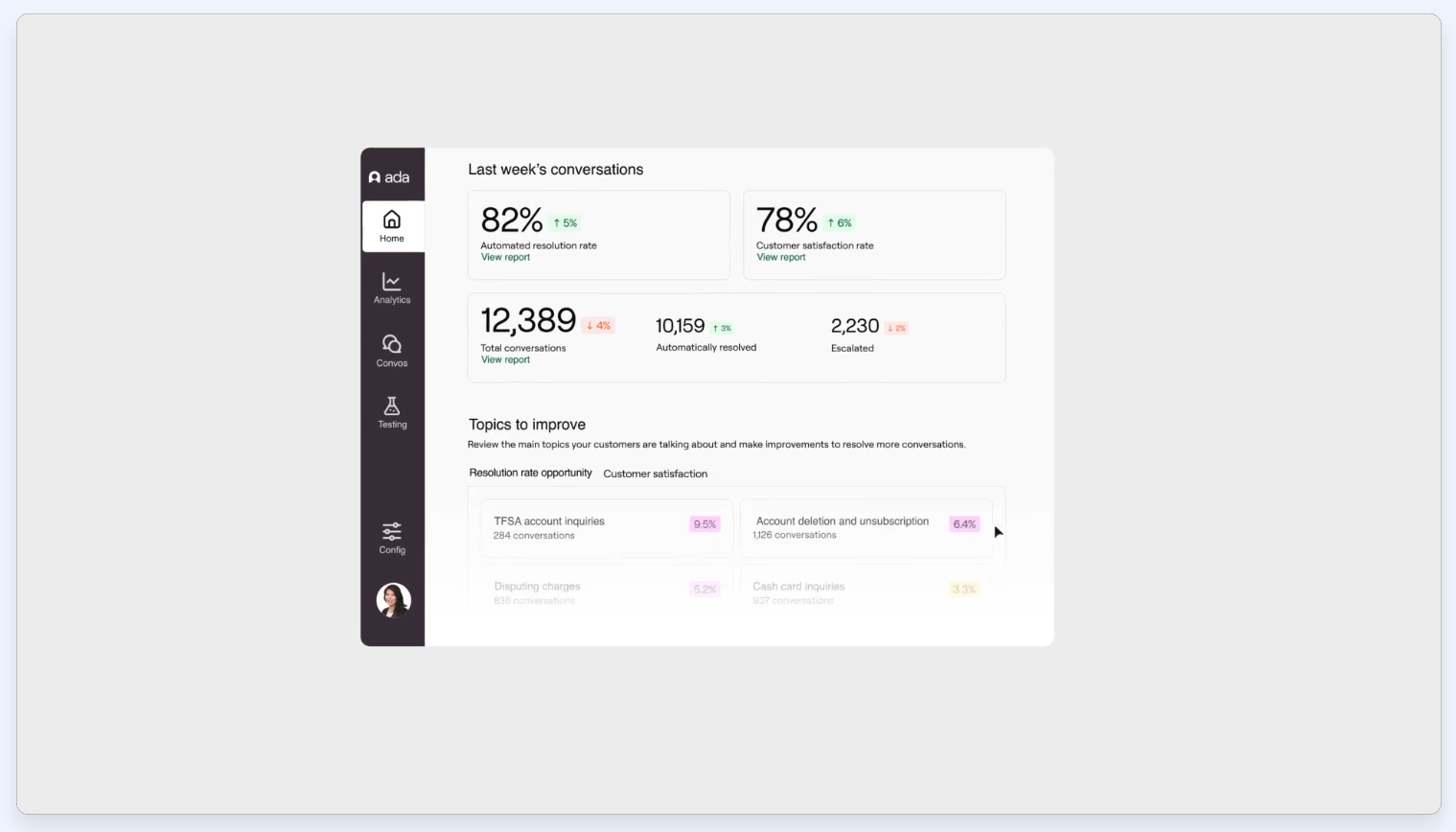
Ada has been automating customer service since 2016, which makes it the veteran of the AI agent group. It runs one agent across messaging, email, and voice in 60+ languages for brands like Pinterest, Monday.com, and Malaysia Airlines.
Key features
-
Single agent, many channels : messaging, email, and voice from one build
-
Playbooks : multi-step workflows that take real actions
-
Multi-LLM orchestration : accuracy controls without single-model lock-in
-
60+ languages : consistent brand terminology managed via glossaries
-
Coaching tools : test, measure, and improve the agent over time
Pricing
Ada doesn't publish pricing. Its pricing page routes to a demo booking. Ada's own content argues for conversation-based billing, so expect to pay per conversation handled rather than per resolution.
Pros
-
Nearly a decade of production deployments
-
Best-in-class language coverage for global brands
-
Multi-LLM approach avoids model lock-in
-
Strong measurement culture with testing and coaching tools
-
Reportedly a lower entry price than newer enterprise rivals
Cons
-
Chat heritage, with voice and email newer and less deep
-
Custom-only pricing with no trial
-
Its own billing-model shift means contracts need careful reading
Best for
Established global consumer brands that need broad language coverage from a proven vendor.
Why choose Ada
Ada is the safe, mature pick among the CX agents. If your board asks "who else has run this in production for years," Ada has the longest answer, and the language coverage to match a global footprint.
5. Intercom Fin
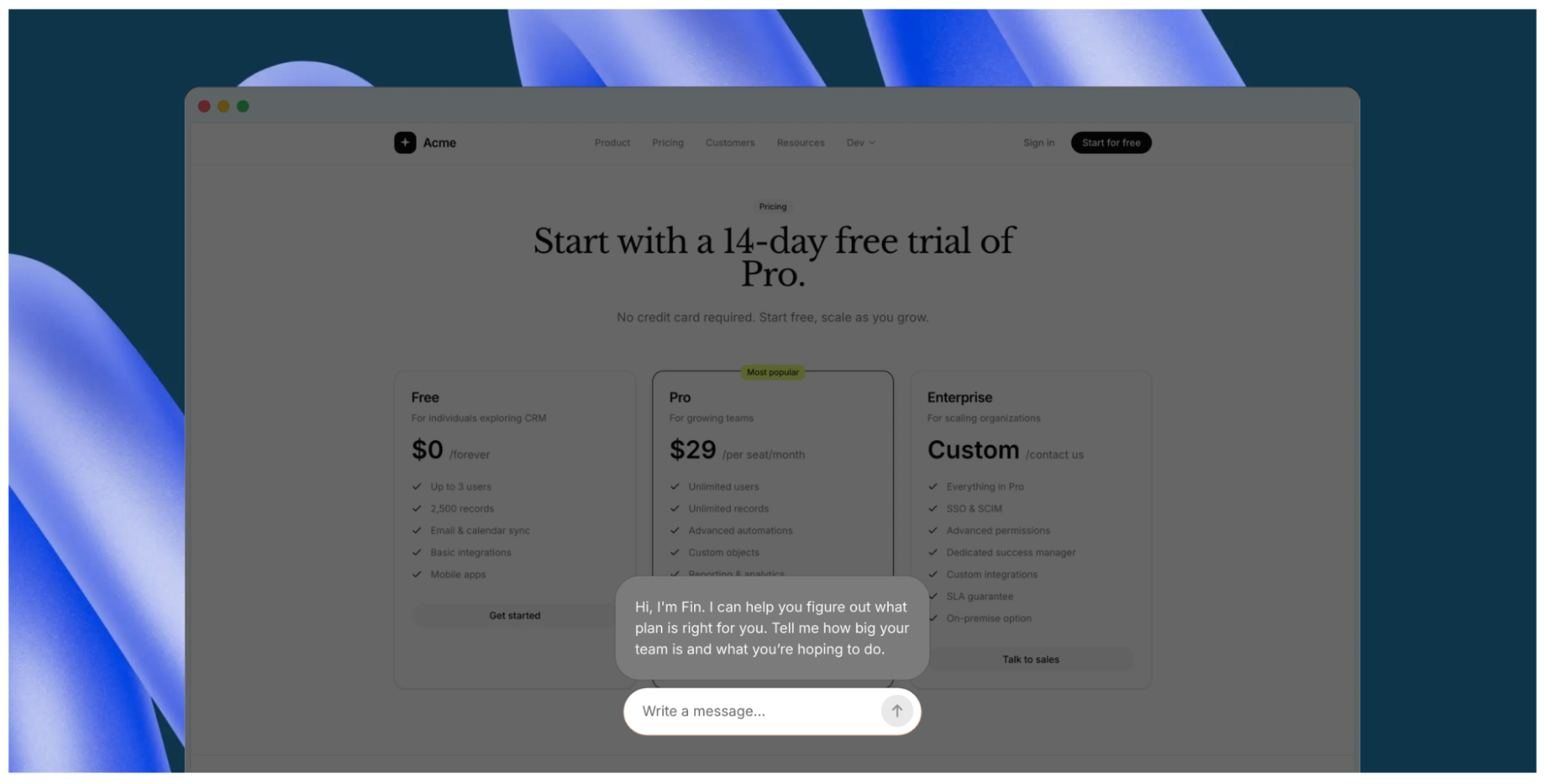
Fin is Intercom's AI agent and the volume leader in published performance claims, citing a 76% average resolution rate across 12,000+ customers. It works inside Intercom or on top of Zendesk, Salesforce, and other helpdesks, with customers like Anthropic and Rocket Money.
Key features
-
Helpdesk-agnostic : runs on Intercom, Zendesk, Salesforce, and more
-
Procedures and Tasks : multi-step actions like refunds and order lookups
-
Train, test, deploy tooling : preview testing and guidance controls
-
QA dashboards : observability on resolutions and agent behavior
-
Fin Copilot : an AI assistant for your human agents
Pricing
$0.99 per resolution, published on the vendor's site, with a 50-outcome monthly minimum. Qualification outcomes for sales use cases cost $9.99 each. Using Fin inside Intercom's own helpdesk adds $29 per seat per month. Fin Voice is sold separately through sales.
Pros
-
Transparent published pricing, paid only on outcomes
-
Strong published resolution benchmarks at huge scale
-
No helpdesk migration required
-
Mature testing and QA tooling
-
14-day unlimited trial with self-serve start
Cons
-
Chat and email heritage, with voice new and gated behind sales
-
Per-outcome costs climb fast at high volume
-
Deepest experience sits inside Intercom's own ecosystem
Best for
Support teams on chat and email that want a proven agent with pricing they can model in a spreadsheet.
Why choose Fin
Fin is the easiest platform on this list to try. The trial is self-serve, the price is public, and it works on the helpdesk you already run. For digital-first support automation, it's the lowest-friction serious option.
6. PolyAI
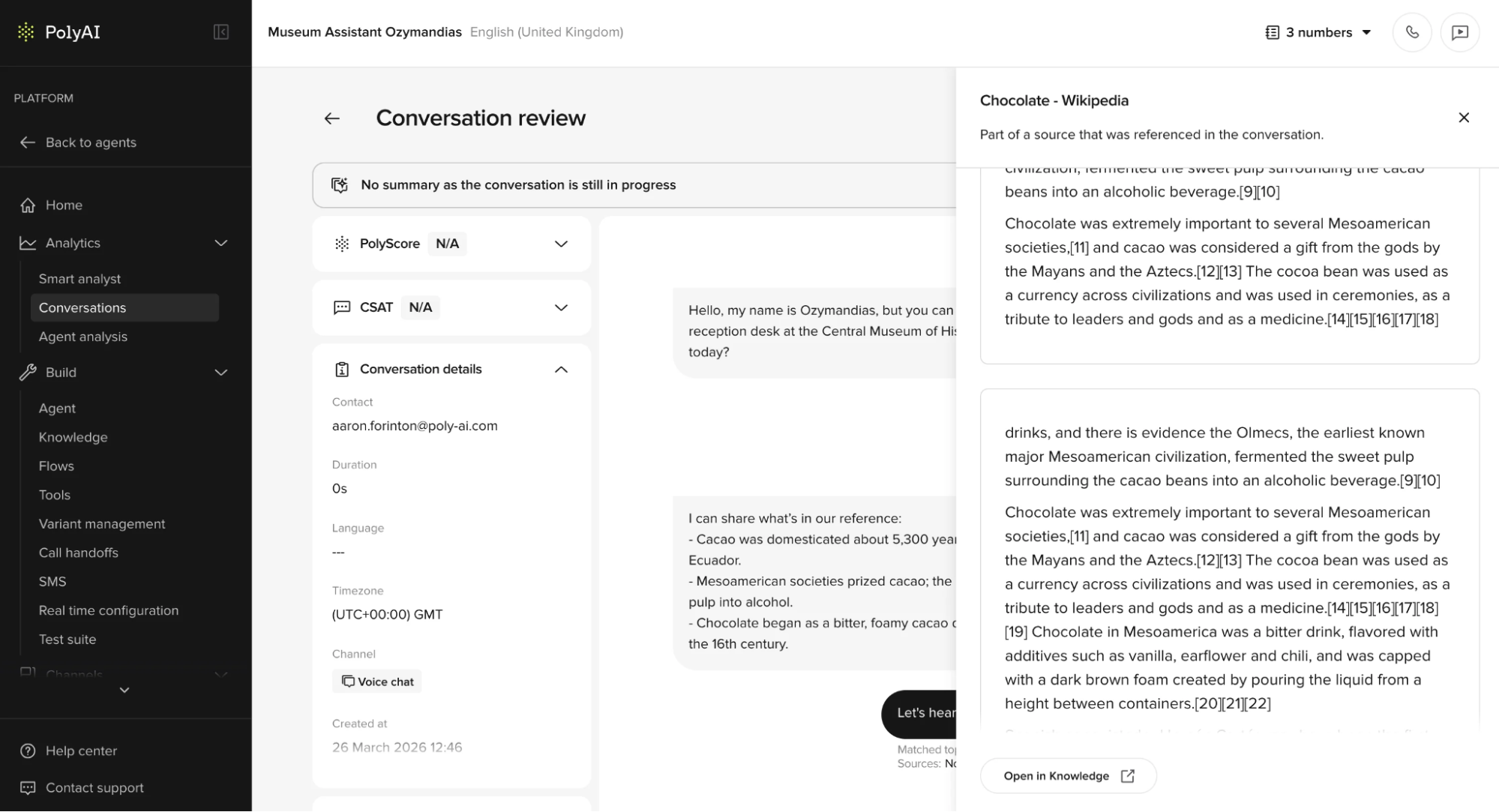
PolyAI builds enterprise voice agents with some of the most natural-sounding conversations in the industry, trained on over a billion enterprise calls. It serves large contact centers in hospitality, banking, and healthcare, with customers like PG & E and Golden Nugget.
Key features
-
Lifelike voice agents : handle interruptions, accents, and background noise
-
Raven model : proprietary conversation model built for enterprise calls
-
Agent Studio : no-code builder, plus an SDK for developers
-
Pre-trained industry agents : faster starts for common verticals
-
Enterprise compliance : SOC 2, HIPAA, GDPR, and PCI DSS
Pricing
PolyAI doesn't publish rates. Pricing runs per minute and bundles ongoing tuning, maintenance, and 24/7 support. Getting numbers means an enterprise sales process.
Pros
-
Widely regarded as a benchmark for natural enterprise voice
-
Managed model includes continuous optimization by PolyAI experts
-
Strong regulated-industry credentials
-
Proven containment results at recognizable brands
-
Both no-code and developer build tracks
Cons
-
No published pricing and no self-serve tier
-
Inbound-first heritage, with outbound requiring account-team activation
-
Managed deployments mean longer cycles and vendor involvement
Best for
Large contact centers with heavy inbound call volume that want premium managed voice automation.
Why choose PolyAI
PolyAI suits enterprises that want a vendor deeply involved in deployment and tuning. If you'd rather buy a managed outcome than operate a platform, and your volume justifies the contract, it's a strong inbound choice.
7. Regal
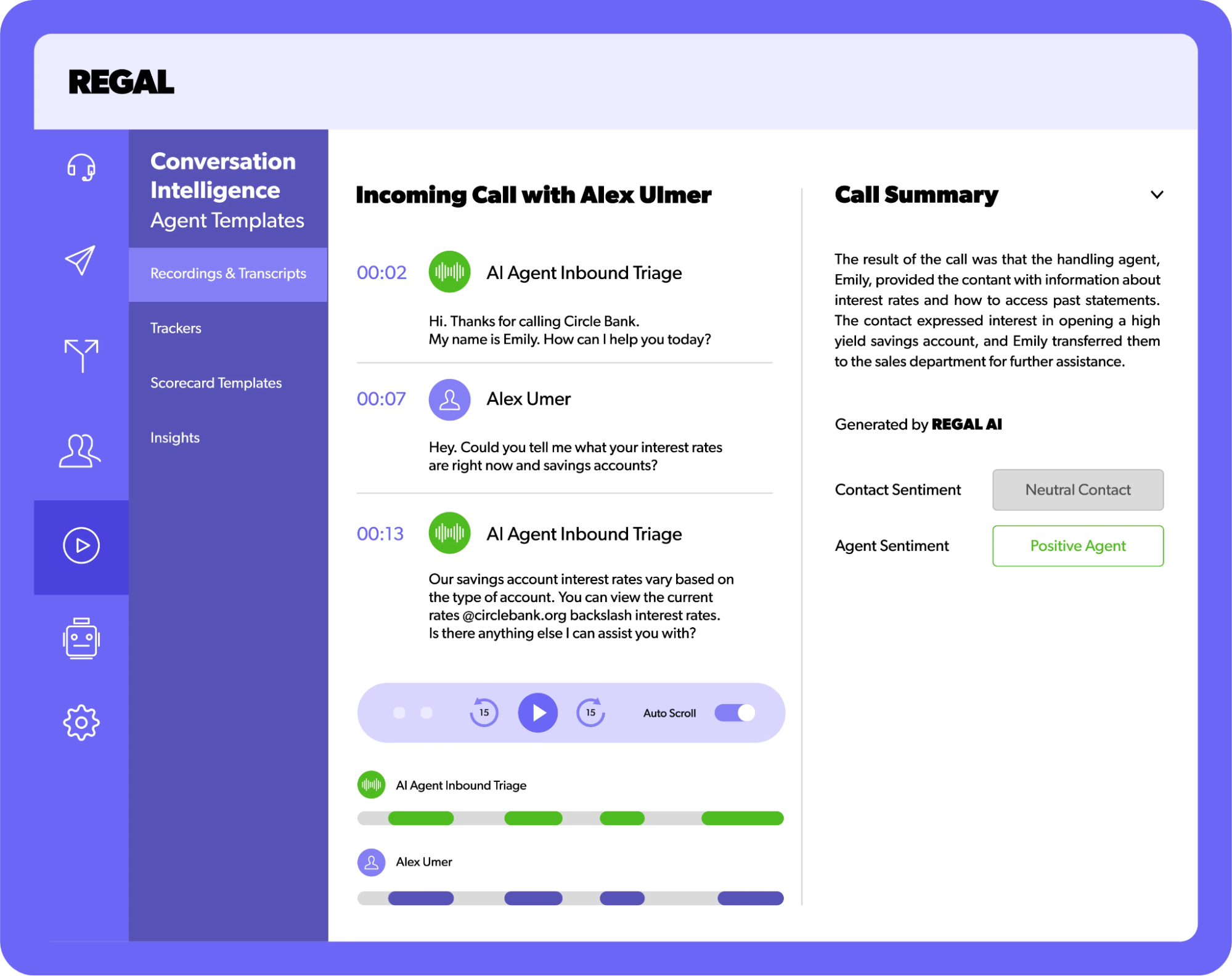
Regal comes from the outbound side of the contact center. It pairs AI phone, SMS, and chat agents with a dialer, IVR, and journey orchestration, aimed squarely at high-volume B2C operations. Customers include Toyota, AAA, and Coursera.
Key features
-
AI agents on three channels : phone, SMS, and chat in one platform
-
Journey Builder : multi-step, multi-channel customer journeys
-
Built-in contact center stack : dialer, IVR, routing, unified profiles
-
A/B testing : compare agents, scripts, and journeys in production
-
Conversation intelligence : automated QA and monitoring
Pricing
Regal's pricing page has no rate card and directs you to sales. The company's own blog cites a typical rate of about $0.20 per minute for AI agents, with platform and implementation fees on top.
Pros
-
Handles outbound and inbound in one system
-
Journey orchestration can replace parts of a CCaaS stack
-
Strong claimed results on containment and speed-to-lead
-
A/B testing supports continuous optimization
-
Rare vendor-stated cost anchor for the category
Cons
-
Regal's own guidance targets teams with 25+ agents and 100K+ monthly minutes
-
Total cost still requires a sales conversation
-
Broader platform than teams wanting only support automation need
Best for
High-volume B2C contact centers that want AI agents plus dialer and journey infrastructure together.
Why choose Regal
Regal makes sense when you want to consolidate outbound infrastructure and AI agents into one vendor at serious scale. Smaller teams will find the entry bar high.
8. Cognigy
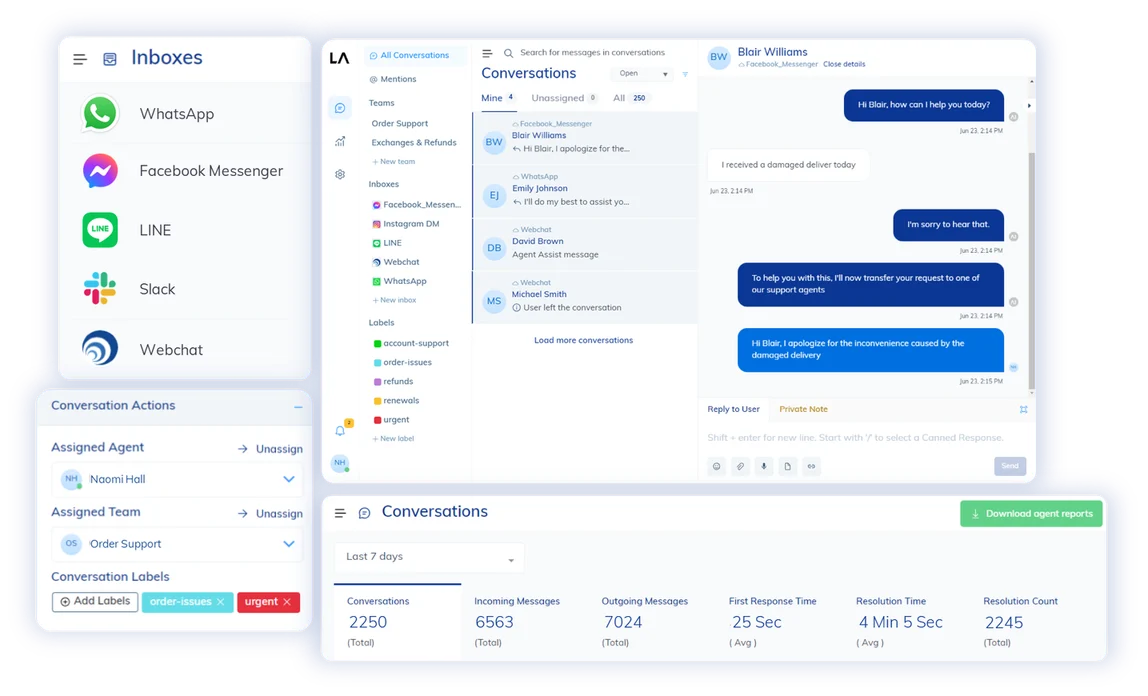
Cognigy, now NiCE Cognigy after its acquisition by NICE, is an analyst-recognized enterprise platform for customer service AI. It's a Gartner Magic Quadrant Leader with deep contact-center connectivity and customers like Lufthansa, Toyota, and DHL.
Key features
-
AI Agent Studio : low-code builder for agentic AI and flows
-
Voice Gateway : turnkey connectivity into CCaaS platforms
-
Knowledge AI : RAG over enterprise content
-
Agent Copilot : real-time assist for human agents
-
80+ languages : with real-time translation
Pricing
Cognigy doesn't publish prices. Billing is conversation-based, with a conversation defined in its docs as up to 50 user inputs in 24 hours on digital channels, or up to 10 minutes of voice per call. Numbers come through sales.
Pros
-
Leader placement in major analyst evaluations
-
Deep voice and CCaaS integration, strengthened by NICE ownership
-
Customer-facing agents and agent-assist in one platform
-
Strong multilingual and translation capability
-
Proven with major global enterprise brands
Cons
-
No published pricing at any tier
-
Rollouts commonly take months and often involve system integrators
-
Steep learning curve before business users are self-sufficient
Best for
Large enterprise contact centers, especially NICE CXone shops, buying through a formal evaluation.
Why choose Cognigy
Cognigy is the defensible enterprise pick. If your organization requires analyst validation, procurement rigor, and deep contact-center integration, it belongs on the RFP shortlist.
9. Kore.ai
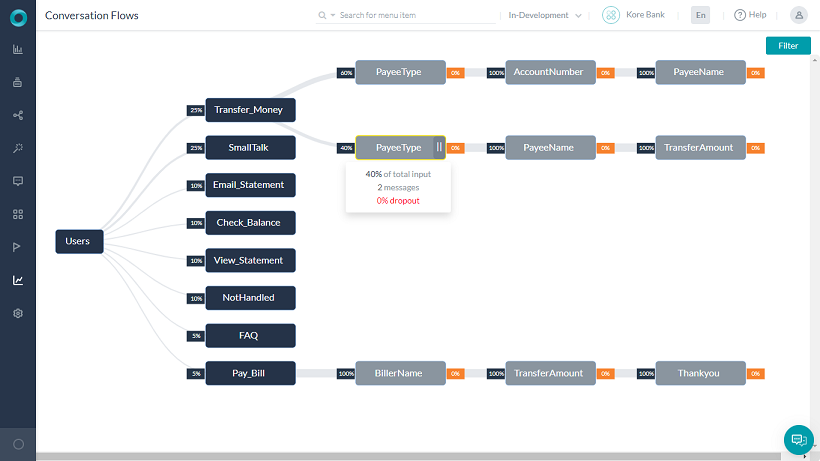
Kore.ai covers more surface area than any other platform here. It spans customer service AI, employee-facing agents for HR and IT, and a general agent-development platform with governance, selling into banks and pharma companies like Morgan Stanley and Pfizer.
Key features
-
Agent Platform : multi-agent orchestration with governance and model choice
-
AI for Service : contact center automation, IVR, and agent assist
-
AI for Work : prebuilt employee agents for HR, IT, and finance
-
Search AI : enterprise RAG over company knowledge
-
Marketplace : prebuilt agents and industry templates
Pricing
Kore.ai publishes a self-serve Standard plan in its developer docs at $0.20 per conversation, with $500 in free credits. The main pricing page shows no numbers. Enterprise tiers are custom quoted and billed per session or per seat depending on the product.
Pros
-
One governed platform for customer, employee, and custom agents
-
Deep credentials in regulated industries
-
A published pay-as-you-go entry point, rare at this tier
-
Real code support alongside low-code building
-
Large marketplace shortens common builds
Cons
-
Dense interface with a steep learning curve
-
Most organizations need technical teams or partners to implement
-
Enterprise pricing beyond the entry tier is negotiated and opaque
Best for
Regulated enterprises that want customer and employee AI agents under one governance model.
Why choose Kore.ai
Choose Kore.ai when the mandate is bigger than customer service. If one platform must serve CX, employee support, and internal agent development with governance over all of it, few vendors match its breadth.
10. Yellow.ai
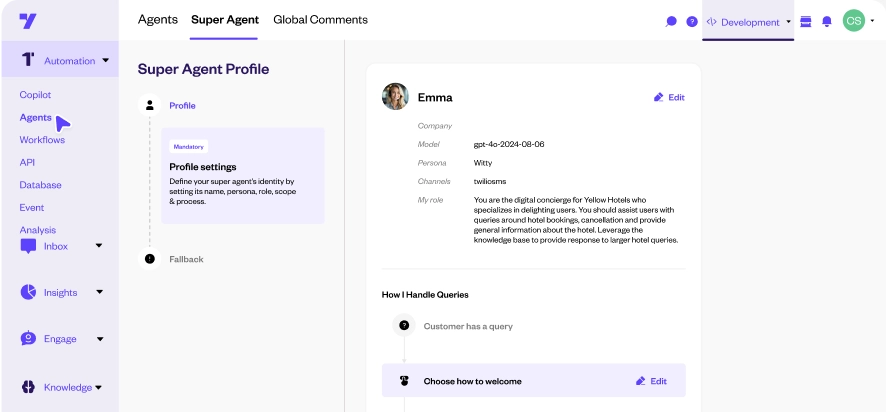
Yellow.ai runs conversational AI for high-volume B2C enterprises across 35+ channels, with a multi-LLM architecture and its VoiceX voice product. It claims 1,300+ brands, with strength in commerce, banking, travel, and logistics across global markets.
Key features
-
35+ channels : WhatsApp, web, mobile, email, and voice with shared context
-
VoiceX : low-latency voice AI with broad language claims
-
AI Agent Builder 2.0 : no-code creation with automated testing
-
Multi-LLM architecture : 15+ models with no single-vendor lock-in
-
User360 and campaigns : customer data layer plus outbound automation
Pricing
Yellow.ai publishes a free plan with one agent and 500 resolutions a month included, then $0.99 per resolution. Its Basic and Enterprise tiers show no public prices and route through sales.
Pros
-
Free entry tier with published per-resolution pricing
-
Context carries across channel switches, useful for WhatsApp-heavy markets
-
Multi-LLM design lets enterprises swap underlying models
-
Broad channel and language coverage for global B2C
-
Usable no-code builder with a large connector catalog
Cons
-
Reviewers cite intent-matching misses and occasional lost context
-
Enterprise pricing beyond the free tier is opaque
-
Prebuilt connectors often need more configuration than the label implies
Best for
Global B2C enterprises, especially in WhatsApp-first markets, that want chat and voice on one platform.
Why choose Yellow.ai
Yellow.ai earns a look when your customers live on messaging apps across multiple countries. The channel breadth and language reach are hard to match at its price point.
11. Retell AI
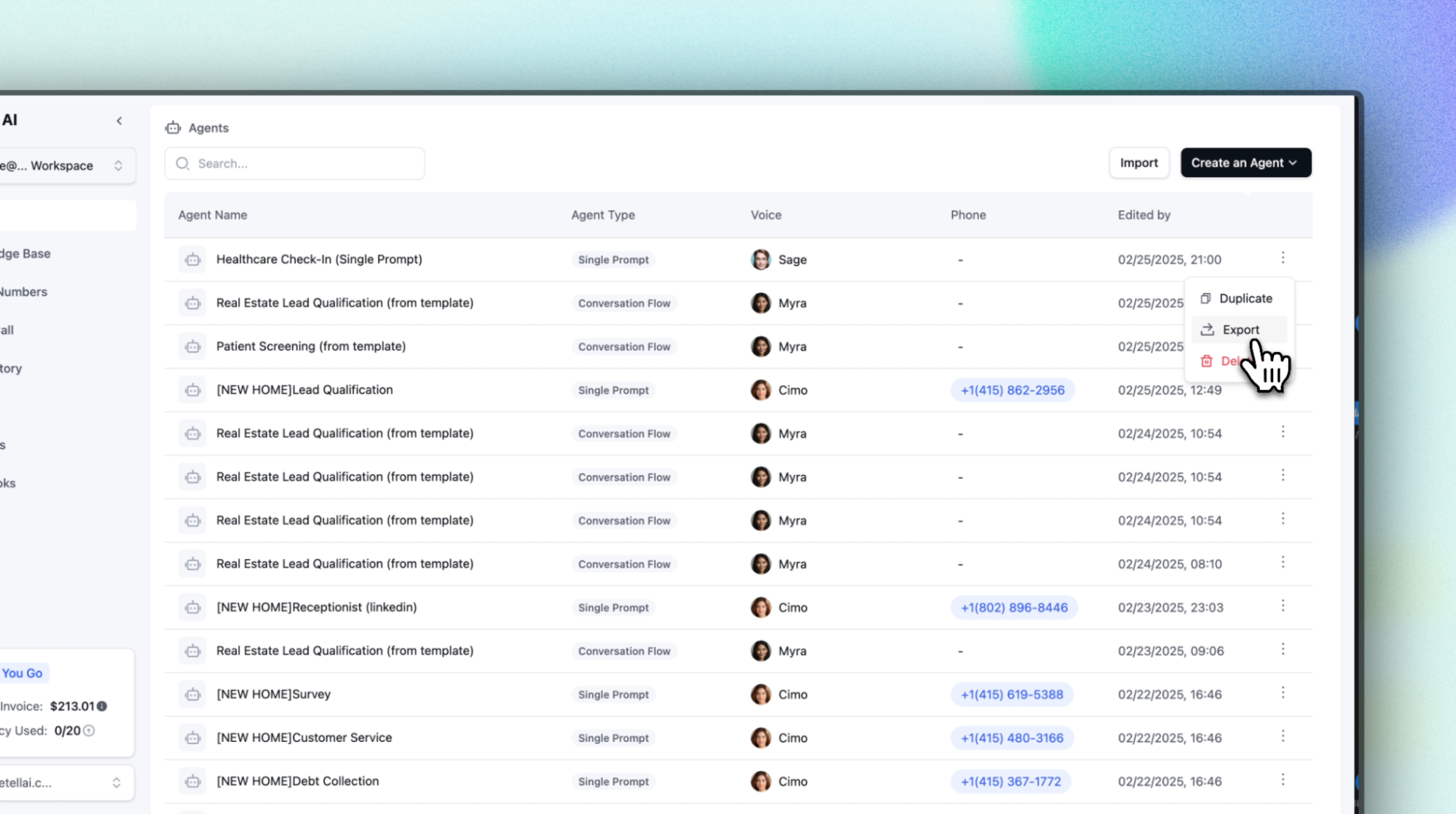
Retell AI gives engineering teams a production-grade platform for AI phone agents. It pairs APIs with a drag-and-drop flow builder and handles the telephony details most platforms leave to you, like batch calling, SIP trunking, and caller ID reputation.
Key features
-
Agent flow builder : drag-and-drop framework with guardrails and function calling
-
Telephony depth : batch campaigns, SIP trunking, branded caller ID, IVR navigation
-
Model choice : OpenAI, Claude, or Gemini, plus multiple voice providers
-
Streaming knowledge base : RAG with auto-sync from your content
-
Built-in QA : post-call analysis, transcription, and call scoring
Pricing
Retell publishes component pricing that lands between $0.07 and $0.31 per minute all in, covering voice infrastructure, your chosen LLM, voices, and telephony. Add-ons like knowledge bases, branded caller ID, and PII redaction bill separately. New accounts get $10 in free credits.
Pros
-
Transparent per-minute pricing with a cheap entry point
-
Telephony tooling competitors leave to third parties
-
Built-in QA and analytics reduce bolt-on tooling
-
SOC 2 Type II, HIPAA, and GDPR available on self-serve tiers
-
20 free concurrent calls is generous for testing
Cons
-
The $0.07 headline climbs fast with capable models and premium voices
-
Still a developer platform despite the visual builder
-
Phone-first, with chat and SMS secondary
Best for
Engineering teams that want production phone agents with the telephony details handled.
Why choose Retell AI
Retell fits teams with engineers who want control over the agent but no interest in building voice infrastructure. You get the plumbing solved and keep the logic.
12. Vapi
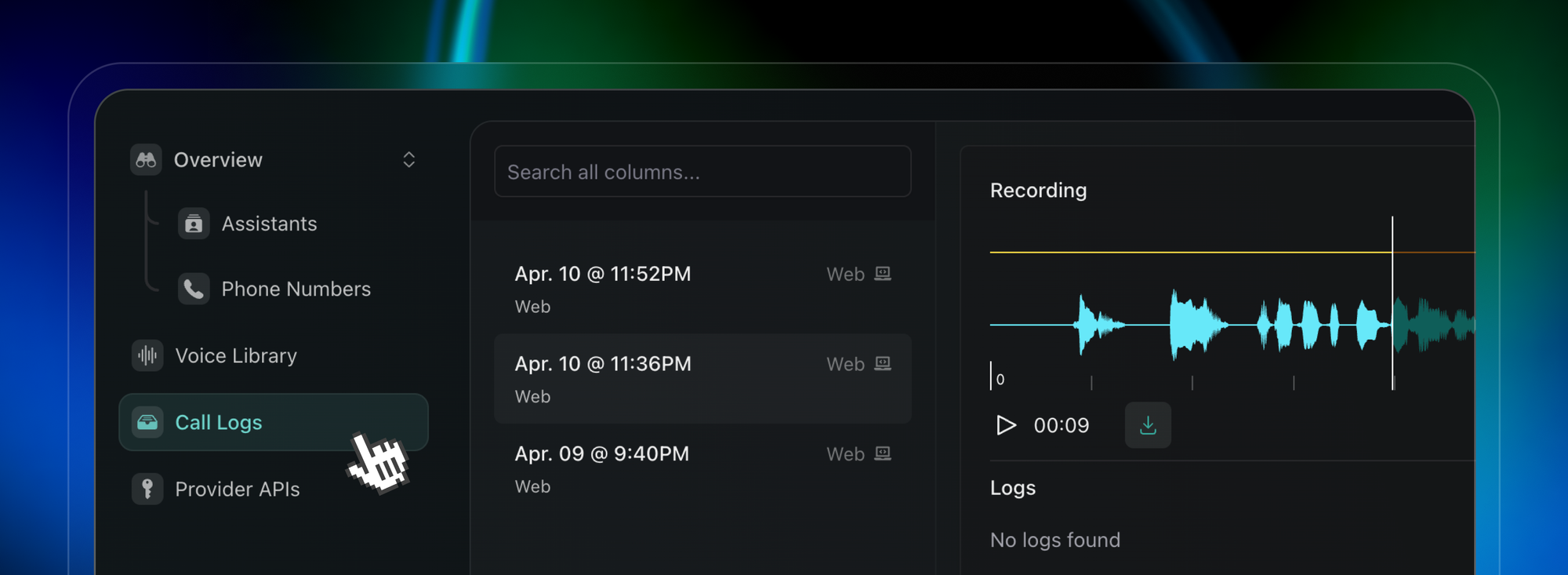
Vapi is an API-first orchestration layer for teams that want to assemble their own voice AI stack. You pick the transcription, LLM, and voice providers, and Vapi runs the real-time orchestration between them, at scale proven by customers like Ring and Intuit.
Key features
-
Model-agnostic stack : mix any STT, LLM, and TTS, or bring your own keys
-
Low latency : sub-500ms averages with real-time interruption handling
-
Workflow builder and test suite : simulate and evaluate agents pre-launch
-
SDKs and webhooks : deploy to phone, web, and mobile
-
Enterprise controls : SSO, RBAC, guardrails, and fleet monitoring
Pricing
$0.05 per minute platform fee, billed to the second, published on the vendor's site. Speech-to-text, LLM, and voice costs pass through at cost, or drop to zero with your own provider keys. Telephony bills at your provider's rates. HIPAA compliance is a $2,000 per month add-on.
Pros
-
Maximum flexibility across every layer of the stack
-
Low platform fee makes high-volume economics attractive
-
Strong developer ergonomics with SDKs and eval tooling
-
Proven at very large scale
-
New models and voices arrive as fast as providers ship them
Cons
-
Assembly required, and you own tuning across four separately billed vendors
-
Total per-minute cost is harder to predict than an all-in rate
-
Compliance add-ons price out smaller regulated use cases
Best for
Developer teams that want full control of the voice stack and the lowest marginal cost at scale.
Why choose Vapi
Vapi is the right call when engineering control is the priority and you have the team to use it. Nothing on this list is more flexible. Nothing hands you more of the work either.
Choose the Right Conversational AI Platform
The right platform depends on which conversations you're automating. Sierra, Decagon, Ada, and Fin are strong picks for chat-led support resolution. Cognigy, Kore.ai, and Yellow.ai fit Fortune 500 evaluations with long deployment horizons. Retell and Vapi reward teams with engineers to spare. PolyAI and Regal serve big contact centers with managed or infrastructure-heavy needs.
If phone and messaging carry your customer relationships, start with CallUltra. You get one agent across every channel, outbound campaigns your operators run themselves, white-glove onboarding on every plan, and inbound support automation with human handoff built in. Teams go live in weeks and see results in their own numbers, like 65% less call-center load and 46% faster outbound handling.